
Management companies sit in an uncomfortable middle ground.
Owners expect assurance (not just paperwork). Captains expect practical support (not more admin). Flag and Class expect evidence.
Yet the typical familiarisation cycle on many yachts still looks like this:
- New crew arrive → hurried handover → “read the SMS when you can”
- Weeks pass → drills happen → confidence rises (maybe)
- Audit/survey approaches → sudden scramble → last-minute “fixes” and refreshers
- Everyone breathes out → the cycle repeats
That pattern doesn’t fail because people don’t care. It fails because it’s reactive by design and reactive systems always look fine… right up until the moment they don’t.
Sentini’s view is simple: If you can’t see the gaps, you can’t manage the risk. And the fastest way to reduce audit surprises (and owner exposure) is to make familiarisation continuous, measurable, and role-specific, not seasonal.

The hidden cost of “audit-driven” familiarisation
Management companies are under constant pressure to keep the yacht available, keep budgets sensible, and keep the owner happy. As your own target profile documents put it bluntly, many management companies drift into a “minimum will do, as long as it gets us through the Flag and Class survey” mindset, partly because pushing harder can feel like commercial risk.
The problem is that “audit-driven” familiarisation carries costs that rarely show up neatly on a spreadsheet:
1) The scramble tax
When familiarisation ramps up only before a survey, it becomes a rushed programme:
- training delivered “because we have to”
- knowledge checked informally
- documentation chased last-minute
- gaps discovered when time is tight
That’s expensive in time, disruptive to operations, and stressful for crew and it often produces shallow confidence rather than genuine readiness.
2) The “false green” problem
A yacht can feel prepared because drills happened and manuals exist. But as The Superyacht Forum’s compliance guidance highlights, staying ahead of audit schedules and maintaining consistent training records is part of a practical compliance strategy, not an annual event.
In other words: having the system is not the same as knowing it’s working.
3) Owner risk, reputational risk
Owners don’t just buy yachts, they buy trust in the operation around them. “No non-conformities” is nice. No nasty surprises is better.
And surprises don’t only come from missing documents. They come from moments like:
- a key person can’t explain a vessel-specific emergency step
- a critical piece of equipment isn’t where someone thinks it is
- procedures exist, but practical recall is patchy across departments
What continuous familiarisation actually means
Continuous familiarisation is simply this:
A lightweight rhythm of learning, checking and reporting that runs all year, so gaps appear early, when they’re easy to fix.
That rhythm should have four characteristics:
1) Role-level visibility
The most useful question for a management company isn’t “have we trained the crew?”
It’s: “Which roles have which gaps, right now?”
Because the gap profile of:
- a new Second Steward/ess,
- a rotating engineer,
- a newly promoted officer,
is different and lumping them together hides risk.
This is where data becomes valuable. Not “big data.” Just clear, simple reporting that shows:
- who is consistently strong
- who is improving
- where the weak spots cluster (department / topic / vessel area)
FATHOM is built around that exact idea: structured, measurable knowledge growth and transparent records that can be reviewed by senior onboard staff and shore teams.
2) “Manual knowledge” that becomes usable
Most yachts have manuals. Many crews don’t continually use them.
The gap isn’t intent, it’s format. Dense documentation (especially the ISM manual) often becomes a box-tick artefact: present, correct, untouched. FATHOM’s approach is to make manual knowledge bite-sized and testable, so the content becomes memorable and practical rather than theoretical.
3) Proof that training worked
Training is often recorded as “delivered.” Auditors increasingly want confidence it was absorbed.
FATHOM’s principle here is a strong one:
“We’re not replacing your training. We’re proving it worked.”
And because the ISM Code is fundamentally about safe management and operation (not paperwork theatre), demonstrating that your safety management system is lived and understood is the direction of travel.
4) Physical familiarisation, not just screen learning
A crew member knowing a fact is helpful. A crew member knowing where to go and what to do is the point.
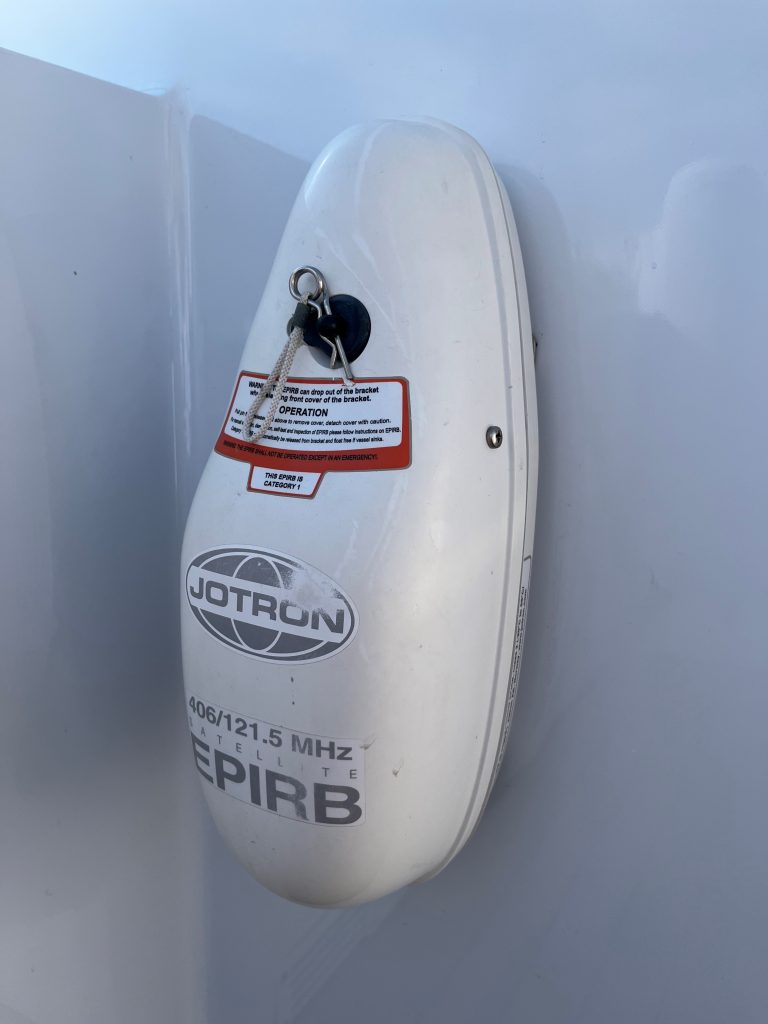
That’s why FATHOM also supports real-world interaction, using NFC/QR-based checks to connect learning to the physical vessel environment and close the “theory vs reality” gap.
The cost/benefit argument
Not every benefit needs a spreadsheet. But management companies do need a rationale they can stand behind, internally and with owners.
Here’s the practical business case for continuous, data-driven familiarisation:
Benefits you can defend
- Fewer survey surprises: you see knowledge gaps early, not during the audit window.
- Lower operational disruption: a steady cadence beats a pre-survey panic.
- Faster onboarding: new crew get up to speed in days/weeks, not months.
- Stronger owner confidence: you can show a living picture of readiness, not a static file of certificates.
- Better targeting of drills: run drills where the data says the weak points are, not where tradition says they “should” be.
Costs you avoid
- the “last-minute training sprint”
- repeated familiarisation because turnover resets knowledge
- reputational damage when an incident exposes weak preparedness
- unnecessary downtime caused by avoidable mistakes (often rooted in poor information access)
This aligns with Sentini’s broader purpose: “We make ships safer”, not by adding bureaucracy, but by improving the accuracy, accessibility and retention of operational safety knowledge.
Why it’s relevant
If you’ve spent time reading industry publications, you’ll have noticed the language shifting: operational excellence, trust, safety, wellbeing and a push to move beyond performative compliance into practical improvement.
Continuous familiarisation fits that shift because it’s not a dramatic overhaul. It’s a management-friendly improvement:
- It reduces risk without demanding massive additional crew time.
- It gives shore teams visibility without micromanaging the yacht.
- It makes audits calmer because evidence is produced as a by-product of good practice.
Or, put more bluntly:
If the auditor walked on today, would you prefer to hope or know?
A simple starting point for management companies
If you manage multiple yachts, the temptation is to standardise everything. The reality is: each vessel is different, each crew is different, and risk clusters in different places.
So start with the lowest-friction step:
- Give your shore team access to an “office” view
- Run a baseline familiarisation snapshot (role-level)
- Identify the top 3–5 gaps that create the most exposure
- Put a light cadence in place (fortnightly / monthly)
- Use the reporting to focus drills, refreshers, and onboarding
That’s it. No fanfare, just visibility and rhythm.
Start a free office version for your shore team
If you’d like to see what continuous familiarisation looks like in practice, without involving the yacht on day one, start a free office version for your shore team. It’s the quickest way to understand where knowledge is strong, where it’s assumed, and where it’s quietly missing until an auditor (or an incident) forces it into the open.
Leave a Reply