
Author: Sentini Marine
-

Near Misses Are Only Valuable If the Yacht Learns From Them
When a crew member intervenes just in time to prevent an accident, the immediate reaction is usually relief. Someone recognised the danger, the operation was stopped, and everyone can take a moment to establish what happened. On a busy yacht, attention soon returns to the programme. The incident is reported, discussed at a safety meeting…
-
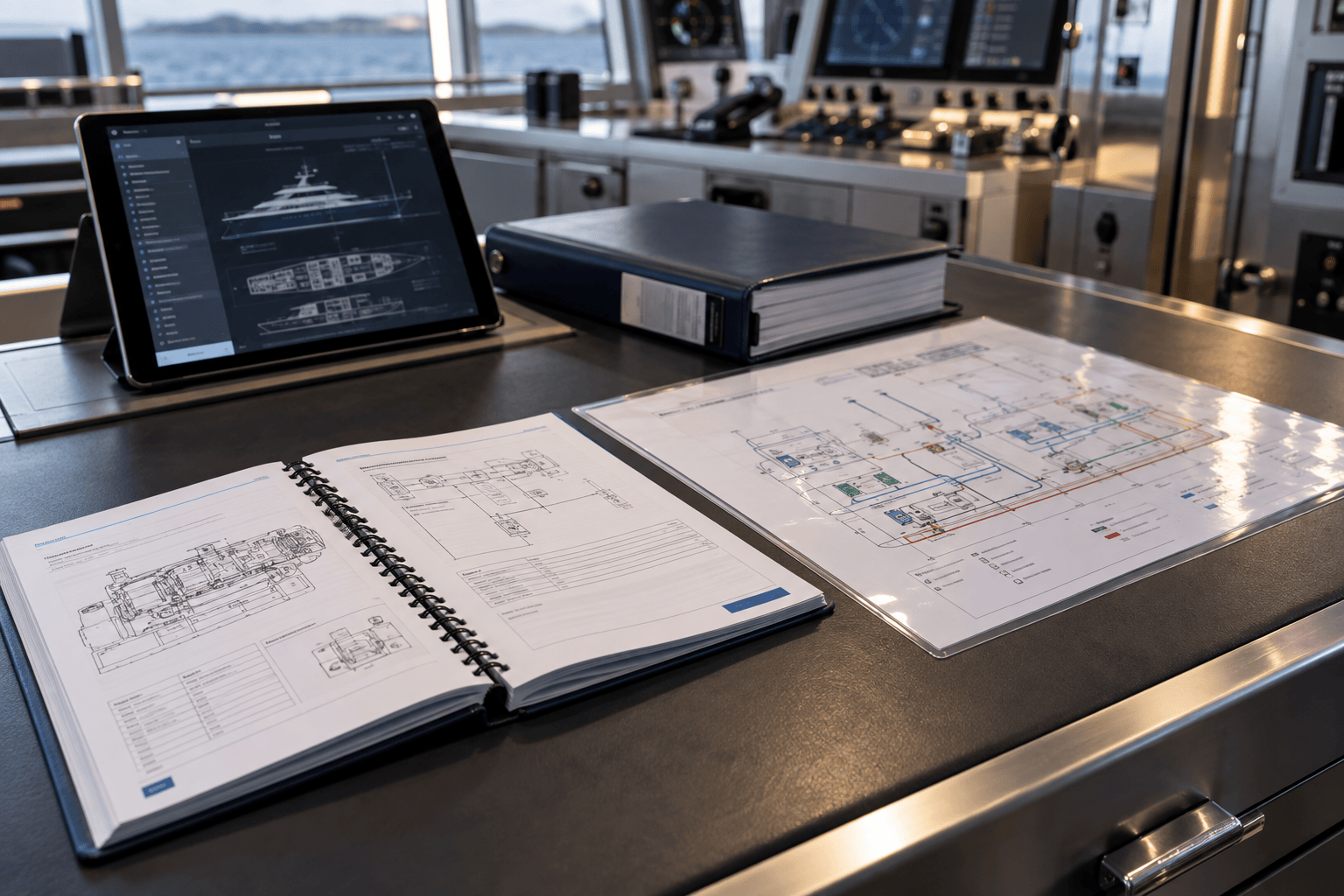
The Safety Value of Laminated Drawings, Pocketbooks and Quick Access Vessel Information
A yacht can have a complete set of manuals onboard and still leave crew searching for the right answer when it matters. The information may exist in a technical operating manual, an OEM document library, a safety manual or a digital system. But during a busy watch, an equipment issue, a handover or an emergency…
-

Shipyard Information vs Operator Information: Why the Difference Matters at Sea
Superyacht consulting a tablet
-

Why Commercial Shipping Documentation Standards Still Have Something to Teach Yachting
Commercial shipping and superyachting operate in very different environments. One is built around the movement of cargo and passengers at scale. The other must combine technical performance with privacy, luxury, flexibility and an exceptional owner experience. Their vessels have different purposes. Their operating profiles are different. Their cultures are different. However, both depend on the…
-
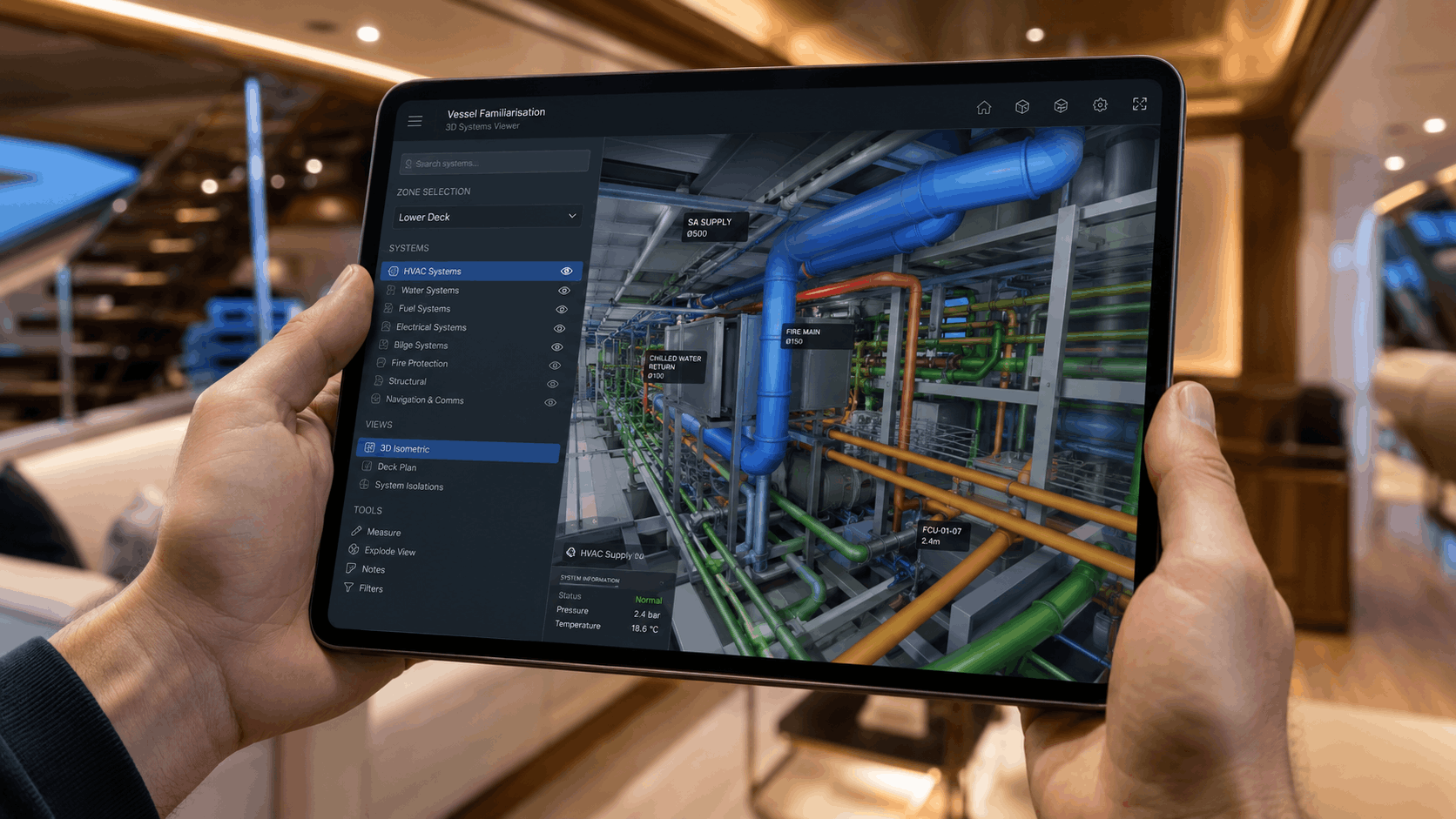
How 3D Laser Scanning Can Reduce Rework in Superyacht Refit Planning
Rework is one of the most disruptive and expensive features of any superyacht refit. A component does not fit the space allocated to it. A new pipe route clashes with an existing service. Access for installation is more restricted than expected. An interior panel has to be removed again because something behind it was not…
-

Why Planned Maintenance Breaks Down When the Starting Information Is Wrong
A planned maintenance system should give a yacht confidence. It should help the crew know what needs doing, when it needs doing, what equipment it relates to and what evidence is needed once the task is complete. It should support safer operation, reduce avoidable downtime and give captains, chief engineers, management companies and owners’ offices…
-

What Good Looks Like in a Yacht Handover Pack
A yacht handover is often judged by whether the required documents have been supplied. The folders are there. The drawings have been delivered. OEM manuals are onboard. The delivery file is technically complete. But that does not always mean the yacht is ready to be operated confidently from day one. For Captains, engineers, officers and…
-

Is Your SMS Stuck in the Past? Integrating Cyber Risk into Daily Safety Routines
Cyber risk is no longer just an IT problem. On a modern superyacht, digital systems sit at the centre of daily operations. Navigation, communications, planned maintenance, AV, guest networks, access controls, remote support, supplier portals and operational documentation all rely on connected technology in one form or another. That means cyber security is not something…
-

The Toy Box Trap: Managing the Risks of E-Foils, Subs and Superyacht Tenders
The modern superyacht toy box has changed dramatically. What was once a collection of jet skis, paddleboards and towables has evolved into a full-scale watersports operation. Today’s yachts may carry high-speed tenders, chase boats, e-foils, seabobs, inflatables, personal submarines, diving equipment and battery-powered toys that require very specific handling, charging, launch, recovery and supervision procedures.…
-

Why proactive safety records shape your insurance profile
There is a quiet shift happening in yacht insurance. It is no longer enough to say you have a Safety Management System, run drills, and pass the annual survey. Underwriters and brokers increasingly want evidence of a well-managed risk profile, supported by records that show how safety is actually being lived onboard, week to week,…