
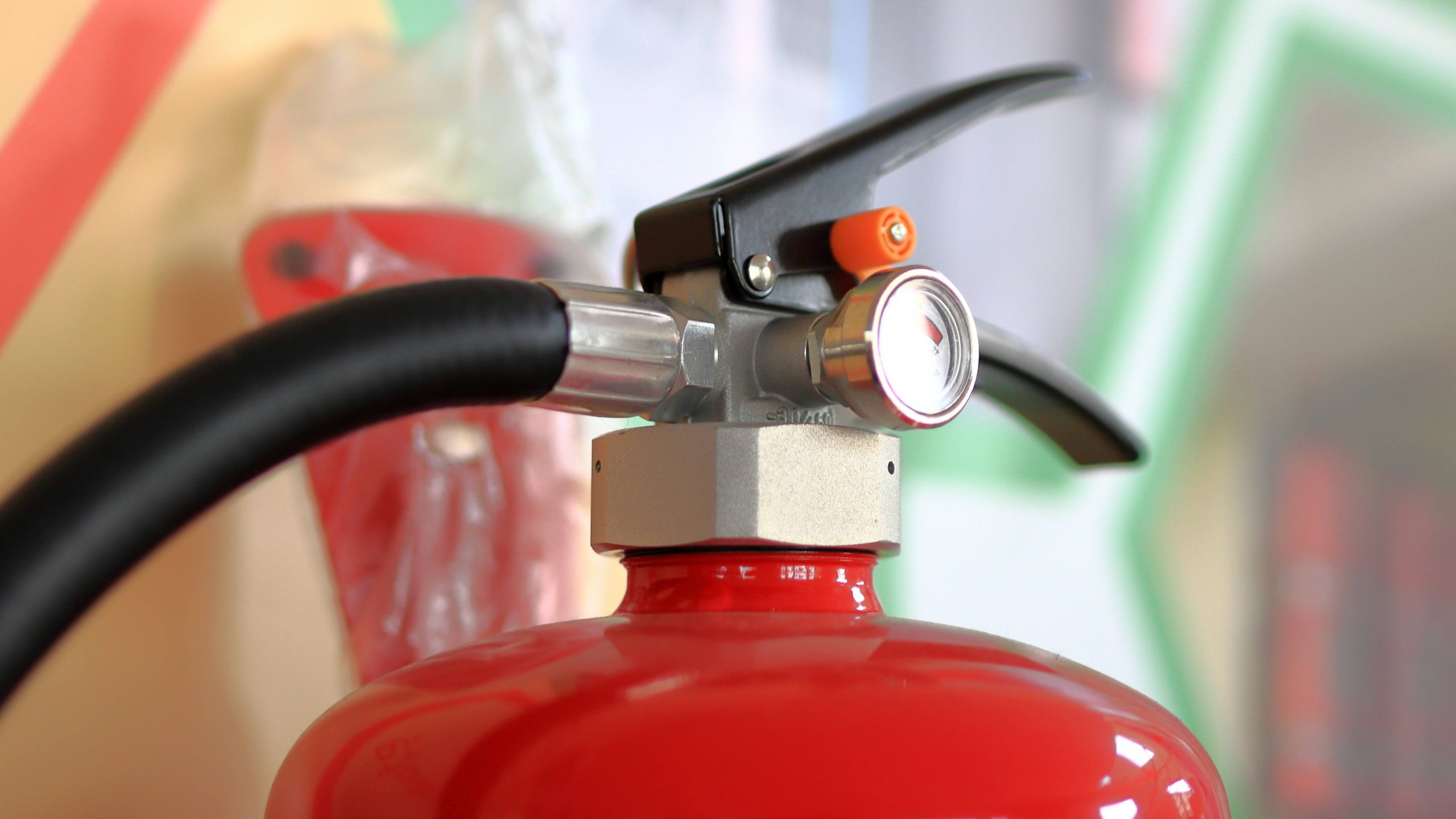
If you want a single, high signal indicator of where Port State Control continues to bite, it is fire safety.
The most recent Paris MoU annual report is the Paris MoU Annual Report 2024, published on 30 June 2025 to 1 July 2025. It is blunt on the trend: fire safety remains a prominent concern, accounting for 17.2% of recorded deficiencies. In other words, nearly one in five deficiency items recorded by the regime sits in the very space where the margin for error is the smallest.
For DPAs and Technical Managers, that should feel uncomfortably familiar. Because the issue is rarely that a yacht does not have the equipment. It is that, under pressure, the human system around the equipment is not as ready as everyone believes.
Fire safety is not “a category”. It is an operational truth
In the superyacht world, we often talk about fire safety as if it is a folder in the Safety Management System. In a Port State Control context, it is something far more practical:
Can the crew demonstrate that critical fire boundaries work, that key equipment is operational, and that the onboard team can respond quickly and correctly.
Paris MoU’s own data keeps pulling us back to the same friction points. Beyond the headline 17.2%, the annual report press release flags fire doors as one of the most frequently recorded individual deficiency items.
And the regime did not stop at reporting it. They went looking.
The fire door reality check: when inspectors changed the rules of the game
Paris MoU ran a Concentrated Inspection Campaign on Fire Safety (1 September to 30 November 2023). Overall compliance was described as satisfactory, but two areas stood out as less favourable:
- Fire doors in good working condition: 9.3% non compliance
- Fire drills: 9.2% non compliance
Then they followed up with an unannounced Focused Inspection Campaign on fire doors (1 to 28 July 2024). The result was worse: 13.9% non compliance recorded.
Here is the line DPAs and Technical Managers should take note on: 30% of that non compliance was considered a lack of implementation of the ISM Code.
That is not a hardware problem. That is an assurance problem.
It means the equipment exists, but the management system has not translated into reliable, repeatable shipboard performance.
Why fire safety keeps failing: the gap between “knowing” and “being ready”
Fire safety deficiencies often come from the same underlying pattern: familiarity fades faster than documentation updates.
On paper, the vessel is compliant. In reality, crew turnover, rotation, time pressure, and fragmented onboard knowledge create a dangerous drift. The result is predictable:
1. Location knowledge is assumed, not verified
In an emergency, “it’s in the locker by the port stairwell” is not good enough. People need the muscle memory of where things are, and how to access them quickly. FATHOM’S positioning leans into this by testing real location knowledge and driving physical familiarisation through NFC and QR touchpoints.
2. Critical steps are buried in manuals, not surfaced in routines
Most crews are well intentioned. The issue is that dense safety content is rarely revisited in a way that sticks. Turning static manuals into bite sized, testable knowledge is exactly the behaviour change you need if you want readiness, not just documentation.
3. Drills become choreography
A drill can be completed successfully while still masking weak understanding and slow decision making. People know the routine, but they do not always understand the why behind each step, or how to adapt when something changes. That gap shows up fast when an inspector asks follow up questions, changes the scenario, or tests whether crew can locate and operate equipment without prompting, especially when the industry has already been warned about weaknesses in fire drills.
4. ISM becomes a file, not a living system
This is the part that hurts most: when deficiencies are judged as a lack of ISM implementation, it signals that the vessel can produce documents but cannot consistently demonstrate effectiveness.
What “good” looks like now: continuous proof, not survey day confidence
The direction of travel is clear across European safety reporting too: fire safety is repeatedly highlighted as one of the most frequently reported deficiency areas.
So the playbook for DPAs and Technical Managers is shifting from “are we compliant” to “can we prove readiness today”.
That proof has three ingredients:
- Frequent, lightweight verification that fits the cadence of yacht operations
- Evidence trails that show improvement over time, not a last minute scramble
- Targeted training that focuses time where gaps are real, not where it is easiest to drill
Where FATHOM fits: reducing the human factor that drives potential risk
FATHOM is not trying to replace drills or training. The value is that it helps you prove they worked.
By converting critical safety content into quick, repeatable checks, and linking digital knowledge to real world physical familiarisation, you reduce the gap that keeps showing up in Paris MoU campaigns: equipment present, but readiness inconsistent.
And because the system produces a visible record of improvement over time, it supports the DPA and Technical Manager’s biggest hidden job: being able to evidence that the Safety Management System is actually implemented, not just documented.
Prove Fire Safety Readiness
If a Port State Control Officer stepped onboard today, would your crew be able to demonstrate fire safety readiness with confidence, not choreography?
If you are not sure, that is the right moment to test it.
Request a FATHOM demo and see a readiness snapshot of where knowledge is strong, where it is fragile, and what to fix first.
Leave a Reply