
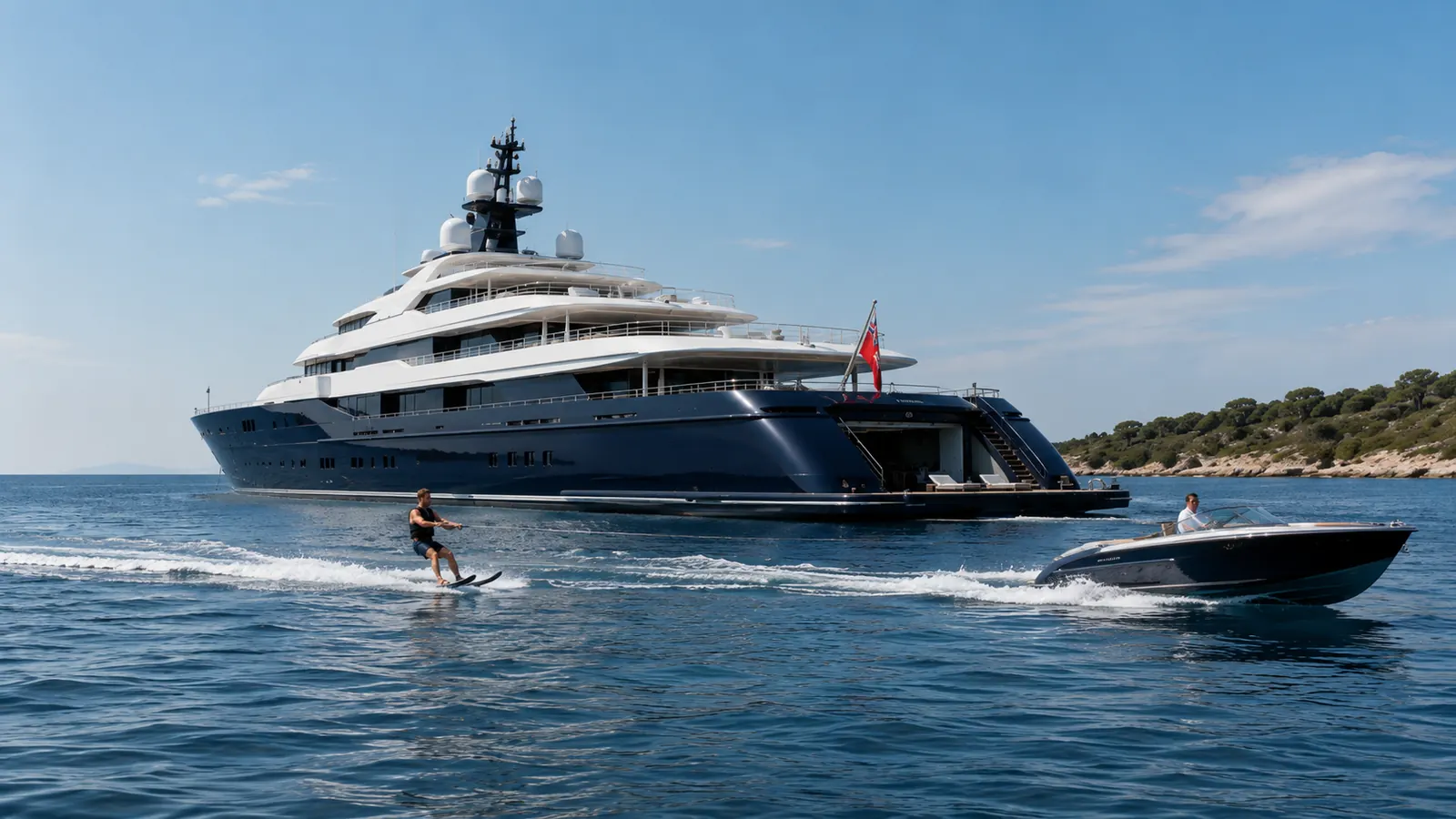
The modern superyacht toy box has changed dramatically.
What was once a collection of jet skis, paddleboards and towables has evolved into a full-scale watersports operation. Today’s yachts may carry high-speed tenders, chase boats, e-foils, seabobs, inflatables, personal submarines, diving equipment and battery-powered toys that require very specific handling, charging, launch, recovery and supervision procedures.
For guests, this is part of the magic.
For captains, bosuns and deck teams, it is a growing operational risk.
The issue is not that these toys are inherently unsuitable for yachts. Many are brilliantly engineered and professionally supplied. The issue is that their use often develops faster than the vessel’s safety documentation, crew familiarisation and onboard verification processes.
A new toy arrives. The supplier gives a handover. The crew read the basic instructions. A few experienced deckhands become the “go-to” people. Then the season gets busy and knowledge starts to live in people’s heads rather than in a system.
That is the toy box trap.
When the manual does not match the operation
Most yachts have safety management systems, operating procedures and manuals in place. But how often do they go into enough practical detail on each individual addition to the vessel?
Does the manual clearly explain:
- Who is approved to operate each tender or toy?
- What pre-use checks are required?
- What weather, sea state or traffic limits apply?
- What PPE is mandatory?
- How lithium-ion batteries should be charged, stored and isolated?
- What emergency response applies to that specific piece of equipment?
- How should guest briefings be delivered?
- What happens if the usual bosun or lead deckhand is not onboard?
These are not theoretical questions. The superyacht sector is already seeing safety reporting around areas such as e-foil battery thermal runaway, tender operations and wider crew safety practices.
And unlike a fixed piece of engine room equipment, yacht toys are often used in a more dynamic environment: close to guests, swimmers, tenders, shorelines, other vessels and sometimes in imperfect conditions.
That creates a different level of risk.
The problem with “they know what they’re doing”
Every captain and bosun has heard some version of this phrase:
- “They’ve used it before.”
- “She’s good on the e-foil.”
- “He knows that tender inside out.”
- “The deck team ran it all last season.”
Experience matters, of course. But experience without verification leaves a gap.
Onboard operations change quickly. Crew rotate. New toys arrive. Batteries degrade. Local regulations vary. Guests behave unpredictably. A toy that feels routine in calm water during a quiet afternoon can become very different when the owner’s guests are waiting on the swim platform and the yacht is working to a tight itinerary.
That is why familiarisation cannot just be informal. It has to be structured, repeatable and specific to the vessel.
Why superyacht toys need vessel-specific familiarisation
A generic safety briefing is not enough for a high-risk toy.
An e-foil does not just require someone to know how to ride it. Crew need to understand safe operating areas, exclusion zones, charging protocols, controller pairing, rescue procedures, propeller risk, battery handling and what to do if the board is damaged or submerged.
A tender is not just a boat. It may have vessel-specific davit arrangements, guest embarkation risks, night operation requirements, local pilotage considerations, communications procedures and limitations in certain sea states.
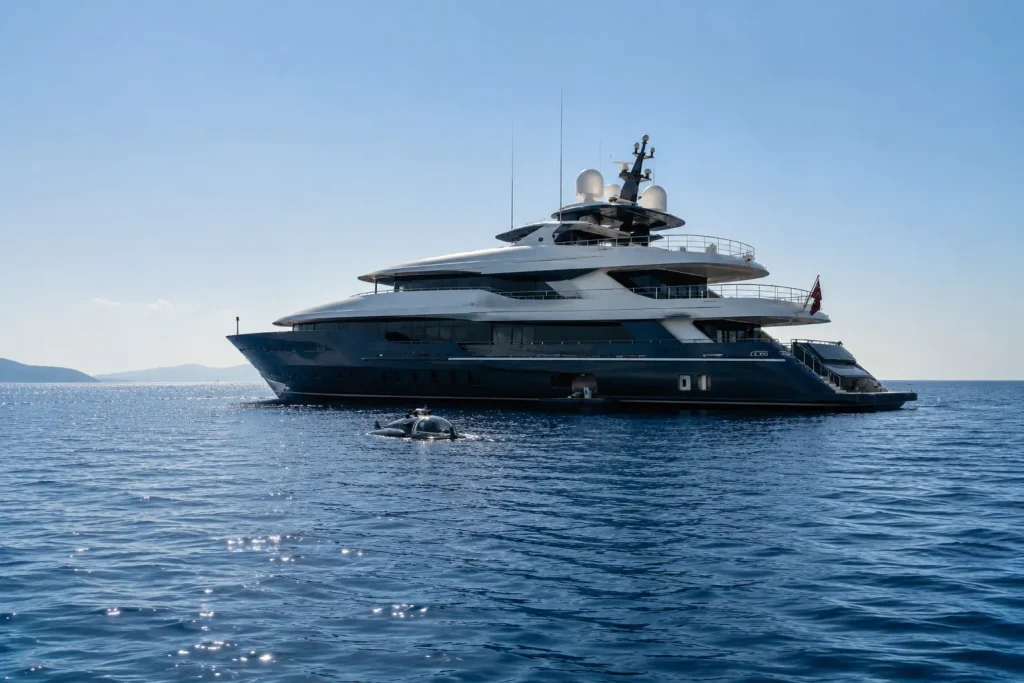
A submersible or specialist toy introduces another layer again, with strict preparation, supervision and emergency planning requirements.
This is where many yacht safety systems begin to show their age. They may be compliant on paper, but not always practical enough for the way the yacht actually operates.
Closing the liability gap before guest use
For captains and bosuns, the question is simple:
Can you prove that the crew member preparing, launching or supervising that toy has understood the specific risks attached to it?
Not just that they attended a briefing six months ago.
Not just that they were shown by another crew member.
Not just that the information exists somewhere in a manual.
Can you prove they have been familiarised, tested and refreshed on the actual operation?
This is where Fathom supports a stronger onboard safety culture.
Fathom allows yacht-specific safety information to be turned into bite-sized familiarisation modules that crew can access on their phones or tablets. Instead of expecting crew to search through dense documents, the relevant information can be made practical, focused and easier to retain. Sentini’s core Fathom messaging is built around converting static safety documents into interactive learning, identifying knowledge gaps and making training more targeted and efficient.
For a yacht’s toy box, that could mean short modules for:
- E-foil launch, recovery and guest supervision
- Tender passenger transfers
- Lithium-ion battery charging and storage
- Submersible support procedures
- Seabob and jet ski operating limits
- Guest safety briefings
- Emergency response for specific toy-related incidents
The point is not to add more paperwork. It is to make the existing safety expectation usable.
Safety should not depend on the busiest person onboard
On many yachts, the bosun becomes the operational memory bank for the toy box.
They know which charger is temperamental. They know which tender needs careful handling astern. They know which guest needs a firmer briefing before using the e-foil. They know the practical details that make the operation safe.
But that knowledge needs to be shared, captured and checked.
Because if safety depends on one person being present, available and not distracted, the system is fragile.
A well-run yacht needs confidence that the whole deck team understands the basics, the risks and the escalation points. Fathom helps support that by making familiarisation measurable rather than assumed. Captains and senior crew can see where knowledge is strong, where gaps exist, and where refresher training may be needed.
That matters during guest trips. It matters during crew turnover. And it matters if something goes wrong and the vessel needs to demonstrate that reasonable steps were taken.
From impressive toy box to safer operation
The most impressive yachts are not simply the ones with the most toys.
They are the ones that can operate them smoothly, safely and confidently.
For captains and bosuns, that means looking beyond the equipment itself and asking whether the safety system has kept pace with the operation. As toys become faster, more technical and more battery-dependent, informal handovers are no longer enough.
The toy box should be a source of guest enjoyment, not hidden operational exposure.
With the right vessel-specific familiarisation, clear procedures and verified crew knowledge, yachts can continue delivering exceptional experiences while reducing avoidable risk.
Manage the risk on your yacht. Make sure your crew do not just know what is onboard, make sure they know how to operate it safely.
Leave a Reply